Slovakia’s industry is facing a tough test. The challenges currently confronting the sector are clearly reflected in the financial results of companies – Železiarne Podbrezová is no exception. Despite posting a significant loss last year, the company continues to invest in modernizing its production technologies to remain competitive on both the European and global markets.
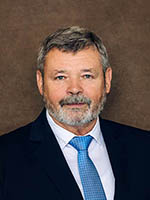
We discussed current challenges, strategies, and outlooks with Marian Kurčík, Vice Chairman of the Board and Chief Financial Officer of Železiarne Podbrezová.
From a financial results perspective, 2024 was not a positive year for your company. What were the main reasons?
– Last year was indeed very bad, arguably the worst in the modern history of Železiarne Podbrezová. It was marked by a lack of orders, low demand for our products, low selling prices, and most of all, high electricity and gas prices. Currently, we have secured around 70% of our energy needs through long-term contracts, but the price remains high. The remaining portion was bought on the spot market, where prices are highly volatile and have negatively impacted our financial results. For our company, which is extremely energy-intensive, this impact is even more significant.
The financial loss last year exceeded 30 million euros. Is there any way to partially cover such an amount?
– Fortunately, we had financial reserves built up in the past, particularly from the economically successful year of 2022. Thanks to that, we were able to at least partially reduce the loss. On a positive note, we were able to continue our planned investments and secured all necessary material and energy inputs. We also paid employee salaries on time, which was our priority.
What is the economic situation like so far this year?
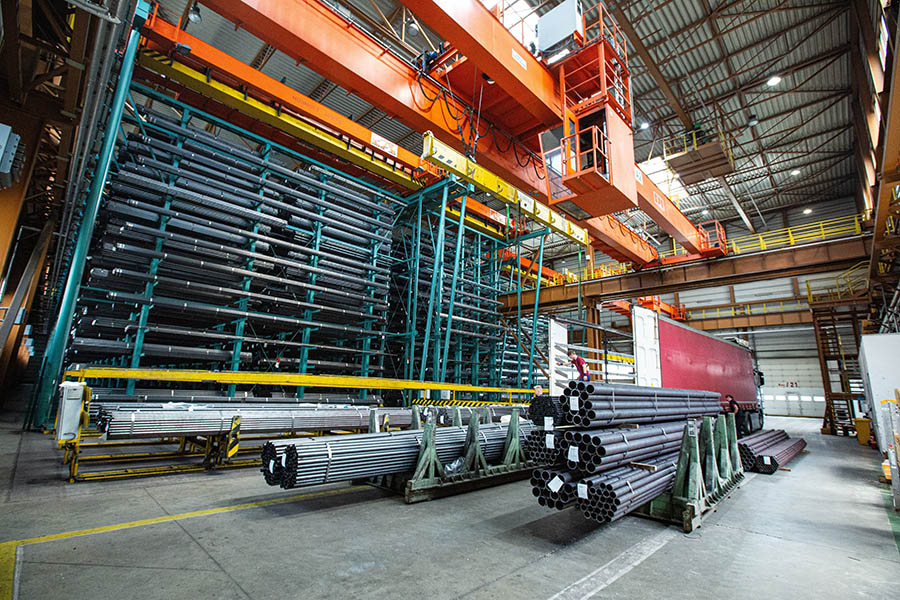
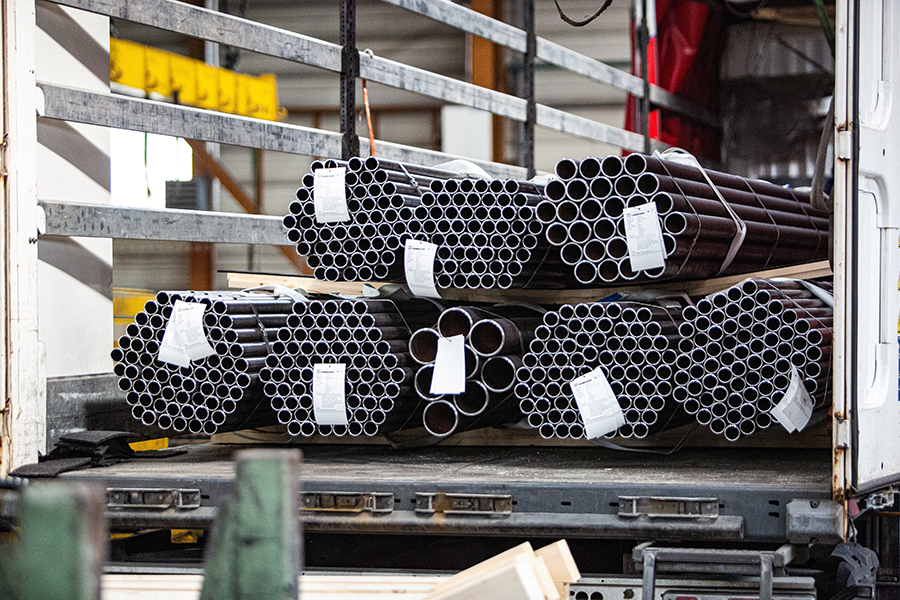
– Unfortunately, the situation is very similar to last year. Electricity and gas prices have slightly decreased, but the drop is marginal, so the battle with high energy costs continues. Demand for our products and market prices have remained unchanged. We expect a slight improvement in the second quarter as the volume of orders has increased by a few percentage points. There is demand for rolled tubes and also precision ones. However, the steel blooms sales situation remains unfavorable. Traders have indicated that prices for our products may slightly increase starting in May. So, from next month and possibly part of June, the situation could slightly improve. We’ll see how the economic outlook develops in the second half of the year.
The current situation also affects cooperation with banks. How are they reacting to it?
– Our relationship with financing banks has been very good for many years. Naturally, they are also reacting to the situation, and I must say not very positively, especially since we are not meeting some financial commitments. As a result, our interest rates were increased. It would help us if they were reduced instead. We plan to negotiate on this. Despite the losses, the banks are maintaining their credit lines and continue to finance us. As long as there are no significantly negative developments, I believe financing for this year will remain in place. However, in the coming years, we may need additional support.
You mentioned compensating the loss with financial reserves built over the years. But this can’t go on indefinitely…
– Exactly. Reporting losses long-term is unsustainable. We can survive a year, maybe two or three. But we’re not just sitting on our hands – we’re actively addressing the situation. We’ve been appealing to the Slovak government and EU authorities to adopt necessary measures. Our government could intervene and support energy-intensive sectors. Take France and Italy, for instance: Italy capped electricity prices at 60 euros per megawatt-hour for energy-intensive sectors, and France set it at 42 euros. The difference is covered by subsidies to energy producers or energy sellers. If we pay more than double that amount, we simply can’t compete. Not to mention the competitive advantage these countries enjoy in the market, employment, and profitability. Compared to them, we are in a much worse position. We’ll see if our government is willing to help. I believe it has the resources. A downside is that we underutilize EU funds and also funds from the Modernization Fund.
Are there any ongoing negotiations regarding possible support?
– We’ve already held discussions with government representatives and sent written requests. However, the political situation in Slovakia is very unstable. Tensions between the coalition and the opposition are high, and even within the coalition, there are conflicts. Hopefully, politicians can resolve these issues and focus on the needs of the country, its people, and the companies that operate here.
We’re discussing a difficult situation at Železiarne Podbrezová. What about its subsidiaries?
– Of course, they are also affected. ŽP EKO QELET and KBZ, which supply us with steel scrap, are directly tied to the metallurgy sector. They recorded losses last year, though not as severe as the parent company. This year started better for them – they trade with other companies and handle the processing and sale of not only scrap but also non-ferrous metals, which helps them offset some of their losses through other business activities. A similar situation applies to ŽIAROMAT Kalinovo, which is also mostly linked to metallurgy.
Despite global and European difficulties in the tubes market, our Spanish subsidiary Transmesa performed relatively well, reporting a profit last year. Their dividends will support us in 2025. Our trading subsidiaries also delivered solid results, maintaining margins despite slightly lower sales. For other service-oriented companies, the goal isn’t profit generation but delivering good-quality services to Železiarne Podbrezová’s employees.
Despite the complex situation, significant investments continue at the plant. Why weren’t they put on hold?
– We are indeed feeling financial strain, which is why we’ll need to find additional funding. The reason is the large-scale investments we’re undertaking. This year, we plan to invest up to 24 million euros. The goal is to maintain our competitiveness in European and global markets. Without investments, that’s not possible. These projects help us save energy and, in some cases, reduce CO₂ emissions. We’re also investing in automation and digitalization to reduce dependence on manual labor. As I mentioned, it’s all about maintaining competitiveness. Once this difficult period ends, we want to be ready to reclaim our strong position in the European market.
What are your final thoughts? Is there hope for better months ahead?
– Every past crisis has eventually ended. The economy works in cycles. The question is how big and deep this current cycle will be and how long it will last. But I’m confident that this difficult period will also pass. The economy is now heavily influenced by political developments in the European Union and here at home. We must also consider the war in Ukraine and the new U.S. administration under Donald Trump. That makes forecasting even more difficult.
Nevertheless, we have a clear vision at our company. Considering our long-standing experience and the importance of Železiarne Podbrezová for the region and for Slovakia as a whole, I believe we will get through this period. Thanks to the investments we’ve made, we hope to remain competitive and ensure a prosperous future for our factory.
Article written by: Podbrezovan